 IA-dbc
FY-valve's Quality Protocol: What Pressure Margin Does a Forged Valve Withstand Without Visible Shape Change
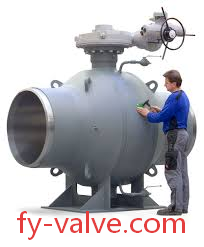
A hydrostatic proof test subjects a valve to pressure levels that intentionally exceed its published class rating. This examination verifies structural integrity without causing permanent damage. Can a Forged Valve pass hydrostatic testing at pressures exceeding its rated class without permanent deformation?
The answer resides in the material's grain flow architecture. A Forged Valve starts as a heated billet that undergoes controlled compression inside precision dies. This working action realigns the metal's dendritic structure into continuous flow lines that follow the component's external geometry. Unlike a casting where grain boundaries orient randomly, the forged product presents a streamlined fiber pattern that distributes hoop stress uniformly across the pressure boundary. FY-valve Fangyuan selects forging reduction ratios that guarantee complete consolidation of the internal structure, eliminating voids that could act as strain concentrators during overpressure events.
Elastic behavior defines the difference between temporary deflection and permanent set. When internal pressure rises above the rated class, the valve body expands slightly within its elastic range. A properly forged component returns to original dimensions once the test pressure releases. The factory validates this property through controlled overpressure cycles, measuring critical dimensions before and after each test. FY-valve Fangyuan accepts only forgings that show full dimensional recovery, confirming that the elastic limit has not been exceeded. A product that retains any measurable deformation fails the qualification because that permanent change indicates yield point penetration.
Material homogeneity contributes directly to overpressure survival. Cast structures contain microporosity, shrinkage cavities, and segregated alloying elements that create weak points. Under elevated hydrostatic pressure, these discontinuities become stress risers where localized yielding begins prematurely. The closed-die forging process eliminates such defects by mechanically welding internal voids during the shaping operation. FY-valve Fangyuan subjects each forging to ultrasonic examination before machining, verifying that no reflector exceeds the code's acceptance criteria. A clean ultrasonic response confirms that the material can withstand proof pressures without initiating cracks at subsurface discontinuities.
Surface condition interacts with overpressure performance. A forging's smooth exterior lacks the sand inclusions or cold shut imperfections sometimes found in cast surfaces. These surface irregularities act as notch effects, multiplying local stress under hydrostatic load. FY-valve Fangyuan machines all wetted surfaces to specified finishes, removing any decarburized layer or forging scale that could initiate yielding. The final product presents a continuous, defect-free pressure boundary capable of containing test pressures safely. This combination of grain flow orientation, elastic recovery verification, ultrasonic cleanliness, and machined surface integrity allows a Forged Valve from this manufacturer to pass hydrostatic overpressure examinations without permanent deformation or hidden damage.
For a comprehensive view of industrial valve manufacturing capabilities, visit https://www.fy-valve.com/. This understanding of fiber flow continuity, elastic limit validation, defect-free material consolidation, and surface finish control explains why a Forged Valve maintains dimensional stability under hydrostatic pressures that exceed its rated class designation.
Kategorien
Mehr lesen
"Key Drivers Impacting Executive Summary Middle East and Africa Smoked Cheese Market Market Size and Share The Middle East and Africa smoked cheese market size was valued at USD 2.93 billion in 2025 and is expected to reach USD 3.98 billion by 2033, at a CAGR of 3.9% during the forecast period A few of the most important objectives of the Middle East and...

Viscosupplementation Market Summary “The global Viscosupplementation Market is expected to reach to USD 7.5 billion by 2032, growing at a CAGR of 6.8% during 2025 to 2032” The TrendBridge Insights Research report, “Global Viscosupplementation Market Report 2025 – Future Opportunities, Latest Trends, In-depth Analysis, and Forecast To 2032”, delivers...

"Global Demand Outlook for Executive Summary Remdesivir Market Size and Share The global remdesivir market size was valued at USD 4.79 billion in 2025 and is expected to reach USD 33.39 billion by 2033, at a CAGR of 27.46% during the forecast period A large-scale Remdesivir Market report comprises of extensive study about diverse market segments and...
"Clad Pipe Market Summary: According to the latest report published by Data Bridge Market Research, the Clad Pipe Market CAGR Value The global clad pipe market size was valued at USD 4.89 billion in 2025 and is expected to reach USD 7.44 billion by 2033, at a CAGR of 5.40% during the forecast period Winning Clad Pipe Market research report is...
" Exactitude Consultancy That Adds Flavour To Your Success" Self-Leveling Concrete Market report. High-flow flooring solutions for residential and commercial subfloor leveling and underlayments. Exactitude Consultancy has just launched its latest market research report, titled "Self-Leveling Concrete Market: Market Size, Share, Growth Outlook & Industry Analysis Report: Type:...