 IA-dbc
Heritage Tourism Market Is Growing as Travelers Seek Cultural and Historical Experiences
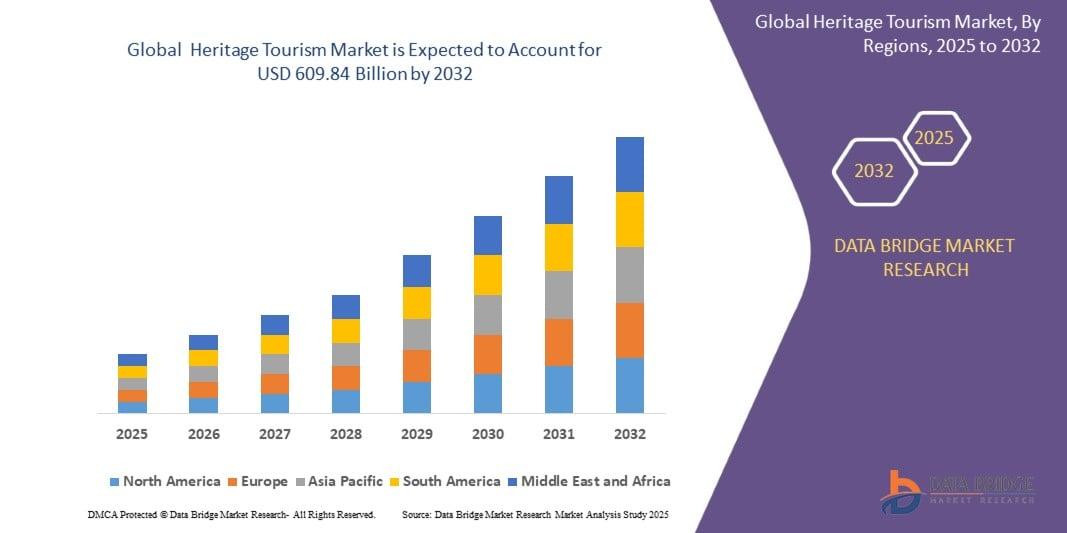
"Heritage Tourism Market Summary:
According to the latest report published by Data Bridge Market Research, the Heritage Tourism Market
CAGR Value
Global Heritage tourism market size was valued at USD 419.11 Billion in 2024 and is projected to reach USD 609.84 Billion by 2032, with a CAGR of 4.80% during the forecast period of 2024 to 2032
Heritage Tourism Market report is a window to the industry which talks about what market definition, classifications, applications, engagements and market trends are. This report analyzes the status and future forecast involving sales, value (revenue), growth rate (CAGR), market share, historical and forecast in the major regions of the world. While building this market report, client business competence is understood adeptly to identify tangible growth opportunities. It provides the key manufacturers, presenting the sales, revenue, market share, and recent development for key players. The world class Heritage Tourism Market report makes some important proposals for a new project of Heritage Tourism Market industry before evaluating its feasibility.
Stay informed with our latest keyword market research covering strategies, innovations, and forecasts. Download full report: https://www.databridgemarketresearch.com/reports/global-heritage-tourism-market
Heritage Tourism Market Segmentation and Market Companies
Segments
- By Type: The global heritage tourism market can be segmented by type into cultural heritage tourism, natural heritage tourism, and intangible heritage tourism. Cultural heritage tourism involves visits to historical sites, museums, landmarks, and other cultural assets. Natural heritage tourism focuses on visits to natural landmarks, national parks, and other natural areas of significance. Intangible heritage tourism includes experiences such as traditional music, dance, crafts, and rituals.
- By Age Group: Another key segmentation of the heritage tourism market is by age group. Different age groups have varying preferences when it comes to heritage tourism experiences. Millennials might be more interested in interactive and immersive experiences, while older generations might prefer guided tours and more traditional forms of heritage tourism.
- By Region: The market can also be segmented by region, with different regions around the world offering unique heritage tourism opportunities. Regions with rich cultural histories, archaeological sites, and natural wonders are likely to attract higher numbers of heritage tourists. Popular regions for heritage tourism include Europe, Asia, Latin America, and Africa.
Market Players
- Expedia Group
- Booking Holdings Inc.
- TripAdvisor
- Travel Leaders Group
- China CYTS Tours Holding Co., Ltd.
- American Express Global Business Travel
- Fareportal
The global heritage tourism market is a dynamic and growing sector that continues to attract travelers seeking unique and enriching experiences. With a focus on preserving and promoting cultural, natural, and intangible heritage assets, the market offers a diverse range of opportunities for both travelers and industry players. Key segments such as cultural heritage tourism, natural heritage tourism, and intangible heritage tourism cater to different interests and preferences among tourists. Additionally, segmentation by age group allows for targeted marketing strategies to attract various demographics. By focusing on different regions with rich heritage offerings, market players can tap into diverse markets and capitalize on the growing trend of heritage tourism.
Market players in the heritage tourism sector include established travel companies such as Expedia Group, Booking Holdings Inc., and TripAdvisor. These companies offer a wide range of heritage tourism packages and services to cater to the needs of heritage tourists. Other key players such as Travel Leaders Group, China CYTS Tours Holding Co., Ltd., American Express Global Business Travel, and Fareportal also play significant roles in shaping the global heritage tourism market. With a focus on innovation, sustainability, and customer experience, these market players are driving growth and development in the heritage tourism industry.
DDDDDThe global heritage tourism market is witnessing a paradigm shift driven by evolving consumer preferences and increasing awareness about the significance of cultural and natural heritage. One emerging trend in the market is the rise of sustainable heritage tourism practices, with an emphasis on responsible travel and conservation efforts. As travelers become more conscious of their environmental impact, there is a growing demand for authentic and sustainable heritage tourism experiences that promote cultural preservation and support local communities. Market players are adapting to this trend by incorporating sustainability initiatives into their offerings and collaborating with heritage conservation organizations to ensure the long-term viability of heritage sites.
Moreover, technological advancements are reshaping the heritage tourism landscape, with the integration of virtual reality (VR) and augmented reality (AR) technologies enhancing visitor experiences and engagement with heritage sites. VR and AR tools enable tourists to explore historical landmarks and cultural sites in immersive ways, providing educational and interactive opportunities that appeal to a wide range of audiences. Market players are leveraging these technologies to create innovative heritage tourism products and services that cater to the evolving preferences of tech-savvy travelers.
Furthermore, the COVID-19 pandemic has significantly impacted the heritage tourism market, prompting industry players to rethink their strategies and operations in response to travel restrictions and safety concerns. The crisis has accelerated the adoption of digital solutions in the heritage tourism sector, with virtual tours and online exhibitions becoming increasingly popular alternatives to physical travel. As destinations gradually reopen and tourism resumes, market players are focusing on implementing health and safety protocols to reassure travelers and rebuild consumer confidence in heritage tourism experiences.
In conclusion, the global heritage tourism market is poised for continued growth and transformation, driven by evolving consumer trends, technological innovations, and sustainability imperatives. Market players will need to adapt to these changes by offering unique and immersive heritage experiences, embracing sustainable practices, and leveraging technology to enhance visitor engagement. By aligning with shifting consumer preferences and addressing emerging challenges, the heritage tourism industry is well-positioned to thrive in a post-pandemic world and sustainably preserve cultural and natural heritage for future generations.The global heritage tourism market is a diverse and dynamic sector that caters to travelers seeking unique and enriching experiences. With key segments such as cultural heritage tourism, natural heritage tourism, and intangible heritage tourism, the market offers a wide range of opportunities for industry players to tap into different traveler preferences and interests. Cultural heritage tourism involves visits to historical sites, museums, and landmarks, appealing to tourists interested in the history and traditions of different regions. Natural heritage tourism, on the other hand, focuses on experiences in natural landmarks and national parks, attracting nature enthusiasts and outdoor adventurers. Intangible heritage tourism includes traditional music, dance, crafts, and rituals, offering immersive cultural experiences for travelers interested in local traditions and customs.
Segmentation by age group is also crucial in understanding the heritage tourism market, as different age groups have varying preferences and expectations when it comes to travel experiences. Millennials, for example, are often drawn to interactive and immersive experiences that allow them to engage with heritage sites in innovative ways. In contrast, older generations might prefer guided tours and more traditional forms of heritage tourism that provide in-depth knowledge and historical context. By targeting specific age groups with tailored marketing strategies, industry players can effectively attract a diverse range of travelers and enhance their overall experience.
Furthermore, regional segmentation plays a significant role in the heritage tourism market, with different regions around the world offering unique heritage attractions and opportunities for travelers. Popular regions such as Europe, Asia, Latin America, and Africa have rich cultural histories, archaeological sites, and natural wonders that draw heritage tourists from across the globe. By focusing on regions with distinctive heritage offerings, market players can capitalize on the appeal of diverse cultural experiences and iconic landmarks that attract travelers seeking to explore and learn about different heritage sites.
Market players in the heritage tourism sector, including established companies like Expedia Group, Booking Holdings Inc., and TripAdvisor, play vital roles in shaping the market landscape and driving growth through innovative offerings and partnerships. Collaboration with heritage conservation organizations, the implementation of sustainability initiatives, and the integration of technology such as virtual reality (VR) and augmented reality (AR) are key strategies that market players are employing to enhance visitor experiences, promote cultural preservation, and adapt to evolving consumer preferences.
In light of the COVID-19 pandemic, the heritage tourism market has faced significant challenges due to travel restrictions and safety concerns. However, industry players have responded by leveraging digital solutions, offering virtual tours and online exhibitions, and implementing health and safety protocols to rebuild consumer confidence and ensure the safety of travelers. As destinations gradually reopen and tourism resumes, market players will need to continue innovating and adapting to the changing landscape by providing tailored and memorable heritage experiences that resonate with travelers and support the long-term sustainability of cultural and natural heritage sites.
Learn about the company’s position within the industry
https://www.databridgemarketresearch.com/reports/global-heritage-tourism-market/companies
Frequently Asked Questions About This Report
What is the long-term future outlook for the Heritage Tourism Market (2033 and beyond)?
How is the Heritage Tourism Market responding to inflation?
What percentage of the global food/tech/healthcare economy does the Heritage Tourism Market represent?
How is the Heritage Tourism Market expected to change by 2033 regarding sentiment?
How does the Heritage Tourism Market in Europe address data privacy concerns?
How is Artificial Intelligence (AI) being integrated into the Heritage Tourism Market?
How are companies using Customer Data Platforms (CDP) in the Heritage Tourism Market?
What is the market valuation of the Heritage Tourism Market industry in China and India?
How is the Heritage Tourism Market catering to Remote Work needs?
How are market leaders addressing the shortage of raw materials?
Which region has the highest per-capita spending on Heritage Tourism Market products?
Browse More Reports:
Global Black Currant Powder Market
Global Black Tea Extract Market
Global Bladder Exstrophy Market
Global Blood Coagulation Analyzer Market
Global Blue Agave Market
Global Body Contouring Devices Market
Global Bone and Joint Health Ingredients Market
Global Bone Cement Mixer Market
Global Boxes Packaging Market
Global Brainerd Diarrhea Market
Global Brain Ischemia Market
Global Bromhidrosis Disease Treatment Market
Global Brown Sugar Syrup Market
Global Bunk Trailers Market
Global Butyric Acid Market
Contact Us:
Data Bridge Market Research
US: +1 614 591 3140
UK: +44 845 154 9652
APAC : +653 1251 985
Email:- corporatesales@databridgemarketresearch.com"
Categorie
Leggi tutto
Why Routine Tasks Pose Hidden Risks: The Role of Cold Work Permits Workplace injuries do not always stem from dramatic breakdowns or major incidents. In many cases, harm occurs during tasks that employees perform every day without much thought. Simple actions like loosening fasteners, making minor equipment adjustments, removing protective covers, or carrying out quick checks are part of...

"Executive Summary Bacillus Calmette-Guerin (BCG) Vaccine Market Size and Share Across Top Segments The global Bacillus Calmette-Guerin (BCG) vaccine market size was valued at USD 61.84 billion in 2024 and is expected to reach USD 92.06 billion by 2032, at a CAGR of 5.10% during the forecast periodThe market growth is primarily driven by the ongoing global efforts to control...
The Real Power of PTW: Turning Safety Rules into Action A Permit to Work (PTW) is not just a formal document—it acts as a structured framework that dictates how high-risk tasks are organized, monitored, and transferred across teams. When implemented effectively and followed consistently, a PTW system brings contractors and internal staff onto the same page, arranges work sequences...
"Global Executive Summary Aluminum Welding Market: Size, Share, and Forecast CAGR Value The global aluminum welding market size was valued at USD 4.47 billion in 2024 and is projected to reach USD 7.02 billion by 2032, with a CAGR of 5.80% during the forecast period of 2025 to 2032 This Aluminum Welding Market research report contains specific segments by type and by application. Each type...

Automotive Diagnostics Market Summary “The global Automotive Diagnostics Market is expected to reach to USD 60.6 billion by 2032, growing at a CAGR of 8.1% during 2025 to 2032” The TrendBridge Insights Research report, “Global Automotive Diagnostics Market Report 2025 – Future Opportunities, Latest Trends, In-depth Analysis, and Forecast To 2032”, delivers...